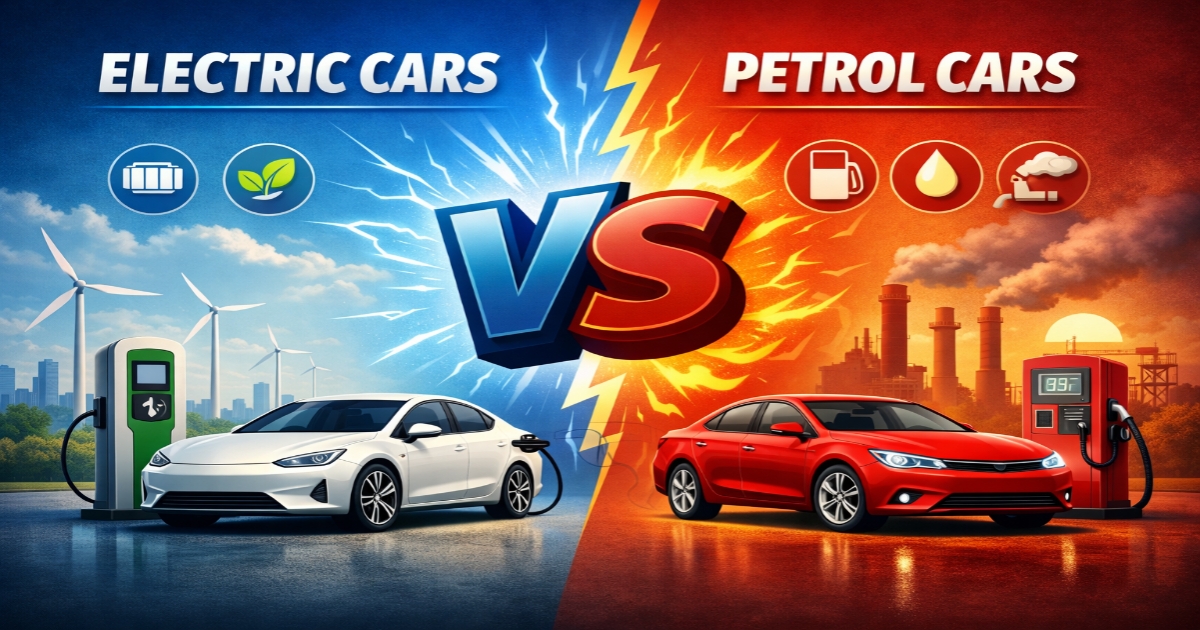

When it comes to choosing a new vehicle in today’s fast-changing automotive world, the debate around electric cars vs petrol cars has become more important than ever. Buying a car in 2026 isn’t as simple as it used to be. A few years ago, most people would walk into a showroom and choose between petrol or diesel without thinking twice.
Today, things are different. Electric cars have entered the mainstream conversation, and they’re no longer seen as futuristic or experimental. Instead, they’re practical, efficient, and increasingly popular.
Table of Contents
At the same time, petrol cars haven’t gone anywhere; they’re still reliable, familiar, and widely used across cities and rural areas alike. This creates a real dilemma for buyers.
Should you go with the new, eco-friendly electric option, or stick with the tried-and-tested petrol vehicle? The answer depends on several factors, including your driving habits, budget, and where you live. Whether you’re searching for an Electric Cars vs Petrol Cars comparison or trying to understand long-term costs, this article covers everything in simple, practical terms.
What Makes Electric Cars Different
Electric cars feel different the moment you sit behind the wheel. There’s no engine noise when you start the car, just silence. Instead of a traditional engine, these vehicles run on batteries that power an electric motor. That changes the entire driving experience.
Acceleration is smooth and immediate, without the delays you sometimes feel in petrol cars. Many people who switch to electric say the biggest surprise is how effortless the drive feels, especially in city traffic. Another big difference is how you “refuel.”Instead of stopping at a petrol pump, you often charge your car at home overnight. That convenience can be a game changer for daily commuters.
When people compare electric cars vs petrol cars 2026, Electric cars also tend to come loaded with modern features like touchscreen controls, app connectivity, and software updates. While they may cost more upfront, they often feel like a step into the future, especially for people who enjoy technology and a quieter, more relaxed drive.
Electric cars are ideal for:
- Daily commuters
- City drivers
- Environment-conscious buyers
- People with access to home charging
- Tech-savvy users
Pros:
- Lower running cost
- Eco-friendly
- Quiet and smooth driving
- Advanced technology
- Government incentives
Cons:
- Higher upfront cost
- Charging infrastructure limitations
- Longer charging time
- Battery replacement cost
Why Petrol Cars Still Hold Their Ground
Despite all the buzz around electric vehicles, petrol cars continue to be the go-to choice for a large number of people, and for good reason. They’re easy to understand, easy to maintain, and incredibly convenient. You don’t need to plan your trips around charging stations or worry about battery levels, you just fill up the tank and go.
This simplicity matters, especially for people who travel long distances or live in areas where charging infrastructure is still developing. When looking at an electric cars vs petrol cars cost comparison, Petrol cars also come in a wide range of price points, making them accessible to almost every type of buyer. Whether you’re looking for a budget-friendly hatchback or a high-performance sedan, there’s a petrol option available.
When people compare electric cars vs petrol cars 2026, Most drivers have grown up with petrol cars, so there’s a level of comfort and trust that comes with them. Even in 2026, that familiarity is hard to replace completely.
Petrol cars are better for:
- Long-distance travelers
- Rural area residents
- Budget-conscious buyers
- People without charging access
- Those needing quick refueling
Pros:
- Lower purchase price
- Easy refueling
- Better for long trips
- Wide availability
Cons:
- Higher fuel cost
- More pollution
- Higher maintenance
- Less future-proof
Cost: What You Really Pay Over Time
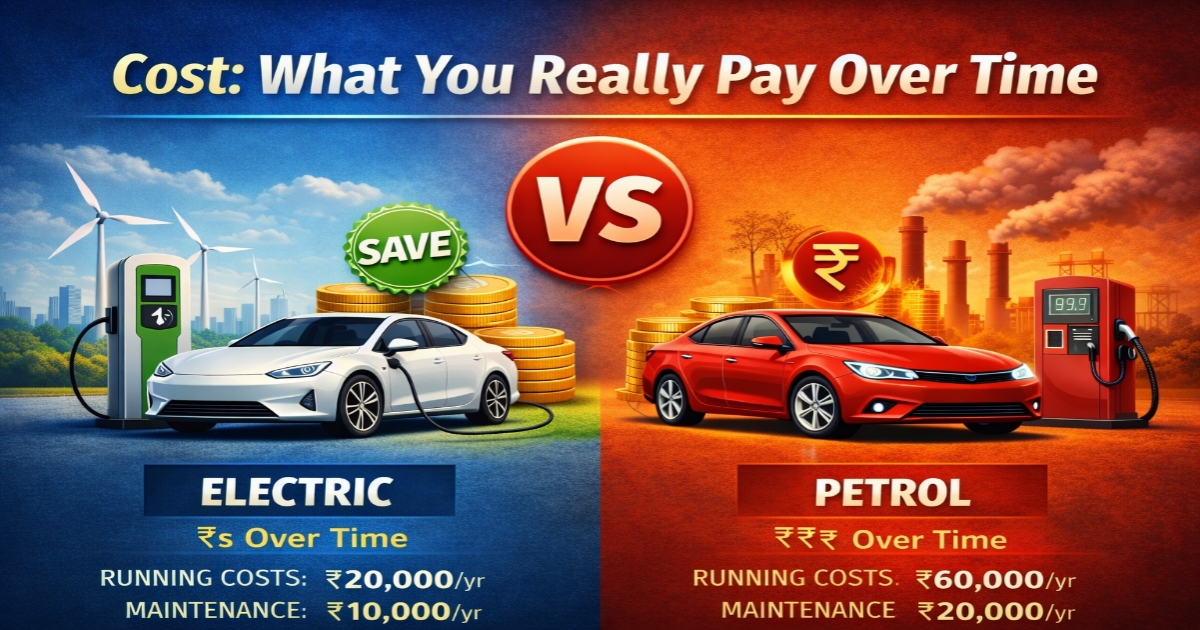
At first glance, petrol cars seem like the cheaper option and in many cases, they are. The initial price is usually lower, which makes them attractive for buyers who don’t want to spend too much upfront. Understanding the real cost of owning a car goes beyond just the purchase price. When comparing electric cars vs petrol cars pros and cons, long-term expenses play a major role. Electric cars, on the other hand, can feel expensive initially because of battery costs. But the real story becomes clear over time.
Running a petrol car means regularly spending money on fuel, and those costs add up quickly, especially with fluctuating petrol prices. Electric cars are much cheaper to run since electricity costs significantly less than petrol. Maintenance is another area where EVs quietly save money. Without complex engines, there are fewer parts that can wear out or need replacement.
If you are evaluating an electric cars vs petrol cars maintenance perspective, EVs clearly offer savings over time. Over a few years, these savings can balance out or even exceed the higher purchase price. So while petrol cars win in the short term, electric cars often make more financial sense if you’re thinking long term.
Driving Experience: Smooth vs Familiar
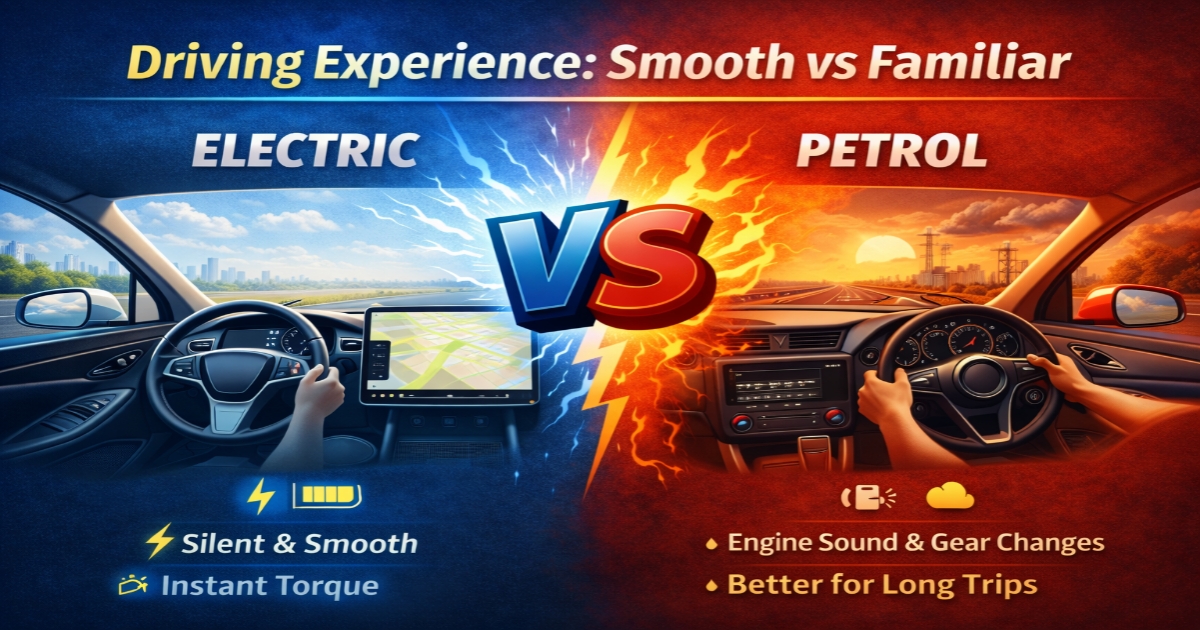
Driving an electric car and a petrol car feels like two completely different experiences. Electric vehicles are incredibly smooth and quiet. There’s no vibration, no engine noise, and no gear shifts. It almost feels like gliding rather than driving.
This makes them especially enjoyable in city traffic, where constant stopping and starting can otherwise be tiring. Petrol cars, however, offer something different and a more traditional driving feel. Many drivers enjoy the sound of the engine and the control that comes with manual or automatic gear changes.
There’s a certain connection to the car that some people don’t want to give up. On highways, petrol cars often feel more predictable for long-distance travel, mainly because refueling is quick and easy. So the choice here isn’t about which is better, it’s about what kind of driving experience you personally enjoy more.
When comparing electric cars vs petrol cars mileage and performance, EVs excel in efficiency, while petrol cars often perform better on highways. The choice depends on whether you prefer a modern, silent drive or a more familiar, hands-on experience.
Environmental Impact: Electric Cars vs Petrol Cars
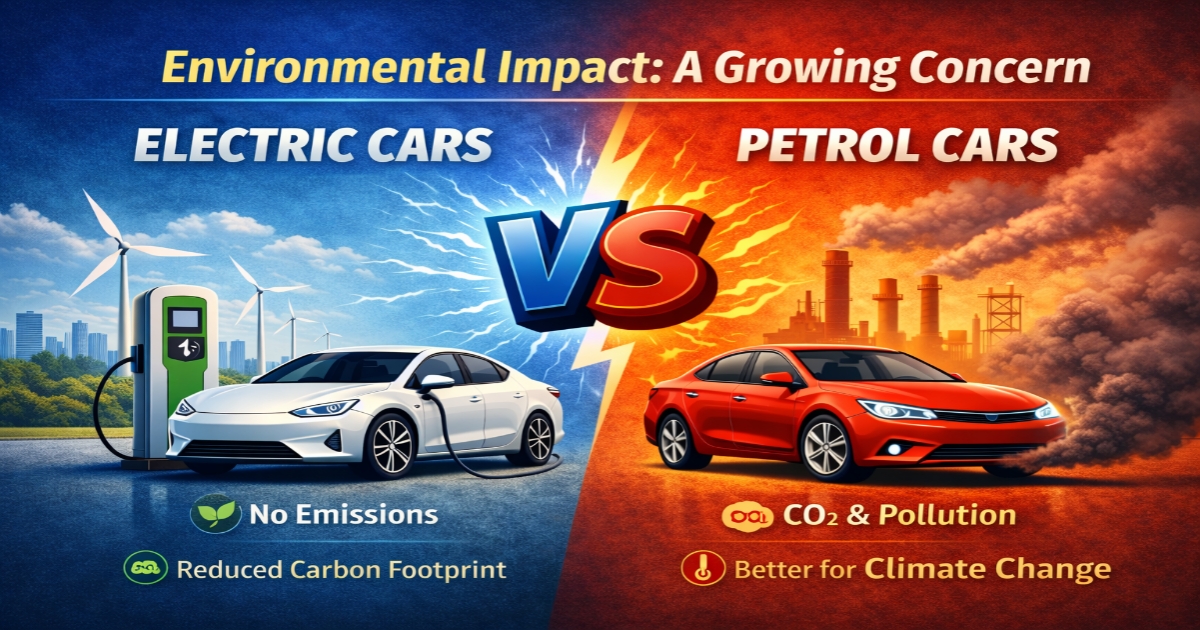
One of the biggest reasons people consider electric cars is their environmental benefit. Electric vehicles don’t produce emissions while driving, which helps reduce air pollution, especially in crowded cities. This is becoming increasingly important as governments and individuals try to tackle climate change. In the debate of electric cars vs petrol cars, EVs clearly have the advantage when it comes to sustainability. Petrol cars, by contrast, release carbon dioxide and other harmful gases into the atmosphere.
Over time, this contributes to pollution and global warming. However, the picture isn’t entirely black and white. Producing electric car batteries also has an environmental cost, particularly during manufacturing. Even so, most studies suggest that electric cars still have a lower overall environmental impact compared to petrol vehicles.
As renewable energy becomes more common, the advantage of electric cars is only expected to grow. For buyers who care about sustainability, this factor alone can be a strong reason to go electric.
Convenience: Charging vs Refueling
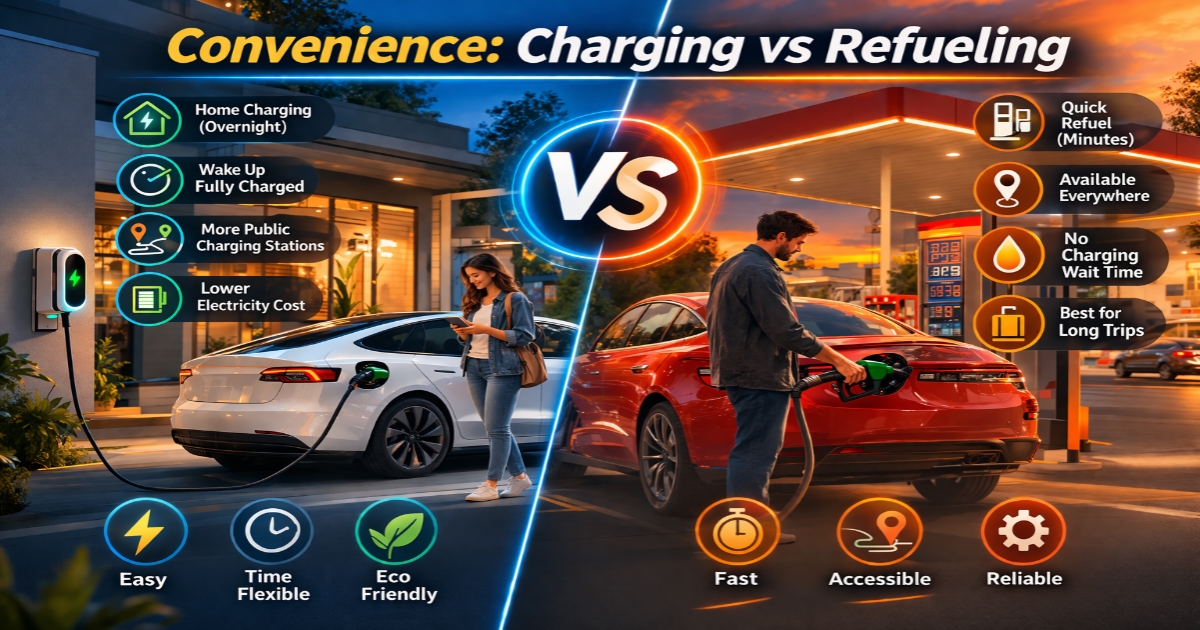
Convenience is another important factor when choosing between electric cars vs petrol cars. Petrol cars are incredibly easy in this regard. You can refuel almost anywhere, and it only takes a few minutes. This makes them ideal for long trips or unpredictable travel plans.
Electric cars require a bit more planning. Charging stations are increasing, especially in cities, but they’re not as widespread as petrol pumps yet. Charging also takes longer anywhere from 30 minutes to several hours, depending on the setup.
However, electric cars offer a different kind of convenience: home charging. Imagine waking up every morning with a fully charged car, without ever visiting a fuel station. For many people, that’s a huge advantage. Still, if you frequently travel long distances or live in areas with limited charging infrastructure, petrol cars currently offer more flexibility.
Final Verdict: Which One Should You Choose?
There’s no single answer that works for everyone. Electric cars are clearly the future, and they make a lot of sense for city driving, daily commuting, and long-term savings. They’re quiet, efficient, and environmentally friendly. But petrol cars aren’t outdated, they’re practical, reliable, and still better suited for certain lifestyles, especially when it comes to long-distance travel and convenience. The right choice depends on how you plan to use your car.
If your driving is mostly within the city and you have access to charging, an electric car could be a smart investment. If you value flexibility, lower upfront cost, and ease of use, a petrol car might still be the better option. Instead of following trends, focus on what fits your daily life. That’s the decision you won’t regret.
When choosing electric cars vs petrol cars pros and cons, long-term expenses play a major role.When asking yourself should I buy electric or petrol car, the answer lies in how you plan to use it.
Choose Electric If:
- You drive mostly in the city
- You want to save on fuel costs
- You care about the environment
- You have access to charging
Choose Petrol If:
- You travel long distances frequently
- You live in an area with limited charging stations
- You want a lower upfront cost
- You prefer convenience over innovation
Frequently Asked Questions ( FAQs ):
Q.1: Are electric cars worth buying in 2026?
Yes, electric cars are worth considering in 2026, especially if you mainly drive in cities and want lower running costs. With improving battery technology, better charging infrastructure, and government incentives, EVs have become more practical than ever. However, your decision should depend on your driving needs and access to charging facilities.
Q.2: Which is cheaper to maintain: electric cars vs petrol cars?
Electric cars are generally cheaper to maintain because they have fewer moving parts and do not require engine oil changes or complex servicing. Petrol cars, on the other hand, need regular maintenance like oil changes, filter replacements, and engine checks, which increases long-term costs.
Q.3: Do electric cars have enough range for daily use?
Yes, most modern electric cars offer a range of 250–500 km per charge, which is more than enough for daily commuting and city driving. For long-distance travel, planning charging stops may still be necessary, depending on the available infrastructure.
Q.4: Is charging an electric car difficult?
Charging an electric car is becoming easier with more public charging stations and the option of home charging. While it takes longer than refueling a petrol car, many users find overnight home charging convenient and hassle-free for daily use.
Q.5: Will petrol cars be banned in the future?
Many countries are planning to reduce or phase out petrol and diesel cars in the coming years to reduce pollution. However, petrol cars will not disappear overnight. They will continue to be available for several years, especially in regions where EV infrastructure is still developing.