
Understanding Vehicle Loans Beyond the Basics
Vehicle loans are a common financial product used by individuals to purchase new or used vehicles without paying the full cost upfront. While the concept appears straightforward, the structure and implications of a vehicle loan are often more complex than they initially seem.
A vehicle loan involves borrowing a specific amount from a financial institution and repaying it over a fixed period through monthly installments, which include both principal and interest.
Table of Contents
However, the total cost of the loan depends on multiple variables such as interest rates, loan tenure, repayment method, and additional charges. Understanding these elements is essential for making informed financial decisions.
Many borrowers focus primarily on the monthly installment amount, commonly referred to as the EMI. While EMIs determine short-term affordability, they do not always reflect the long-term financial impact of the loan. Factors such as processing fees, insurance costs, loan restructuring charges, and interest calculation methods can significantly increase the total repayment amount.
In addition, loan agreements often contain clauses that borrowers may overlook, including prepayment penalties or variable interest rate conditions.
Important aspects of vehicle loans include:
- The distinction between loan principal and total repayment amount
- The impact of loan tenure on overall interest paid
- Differences between new and used vehicle loan structures
- Additional costs beyond interest rates
- The importance of reviewing loan documentation carefully
By understanding vehicle loans beyond surface-level terms, borrowers can better evaluate their financial commitments. A well-informed approach reduces financial strain, improves budgeting accuracy, and supports long-term financial stability. Vehicle loans should be viewed as structured financial agreements rather than simple payment plans.
How Vehicle Loan Interest Rates Work
Interest rates are a core component of vehicle loans and play a significant role in determining the total cost of borrowing. An interest rate represents the cost charged by the lender for providing funds and is typically expressed as an annual percentage.
While many borrowers compare loans based on advertised rates, the actual interest paid depends on how the rate is calculated and applied over time. Understanding this process helps borrowers avoid misinterpretation and make accurate comparisons.
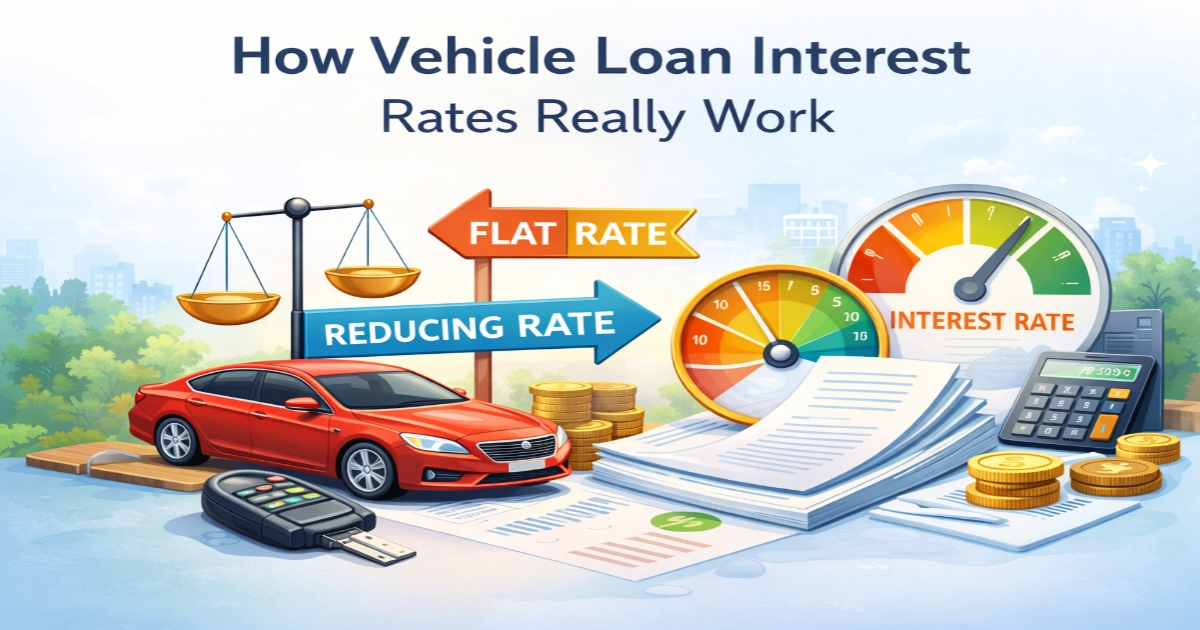
Vehicle loans generally use either a flat interest rate method or a reducing balance method. Under a flat rate system, interest is calculated on the full loan amount for the entire tenure, resulting in a higher effective cost.
In contrast, reducing balance interest is calculated on the outstanding principal, which decreases as repayments are made. Although reducing balance loans are more transparent, borrowers may still misunderstand how interest accumulates over time.
Factors that influence vehicle loan interest rates include:
- Credit score and repayment history
- Loan tenure and repayment capacity
- Type and age of the vehicle
- Economic conditions and lending benchmarks
- Internal risk assessment policies of lenders
Interest rates can be fixed or variable, depending on the loan agreement. Fixed rates remain constant, while variable rates may change based on market conditions. Borrowers should evaluate the stability of their income and financial goals before selecting a rate structure. A clear understanding of interest rate mechanics supports responsible borrowing and long-term financial planning.
The Role of Psychology in Vehicle Loan Decisions

Psychology plays an important role in how individuals perceive and select vehicle loans. Financial decisions are often influenced by emotions, convenience, and perceived affordability rather than purely analytical evaluation.
Lenders and dealerships typically present loan options in ways that emphasize ease of repayment and immediate access to a vehicle. This approach can shape borrower preferences and expectations, sometimes diverting attention from the total financial commitment involved.
One common psychological factor is the focus on monthly payments rather than total cost. Lower EMIs can create a sense of affordability even when the loan tenure is extended, increasing the total interest paid.
Another influence is time pressure, where limited-time offers or fast approvals encourage quicker decisions. These situations may reduce the likelihood of thorough comparison and evaluation.
Common psychological considerations include:
- Preference for lower monthly payments
- Emotional attachment to vehicle ownership
- Social influence and lifestyle expectations
- Perceived urgency in decision-making
- Overestimation of future income growth
Recognizing these psychological elements allows borrowers to approach vehicle loans more objectively. Taking time to review multiple offers, reading loan terms carefully, and considering long-term affordability can help mitigate emotional bias. A structured decision-making process supports financial responsibility and reduces the risk of future repayment challenges.
Smart Timing for Taking a Vehicle Loans
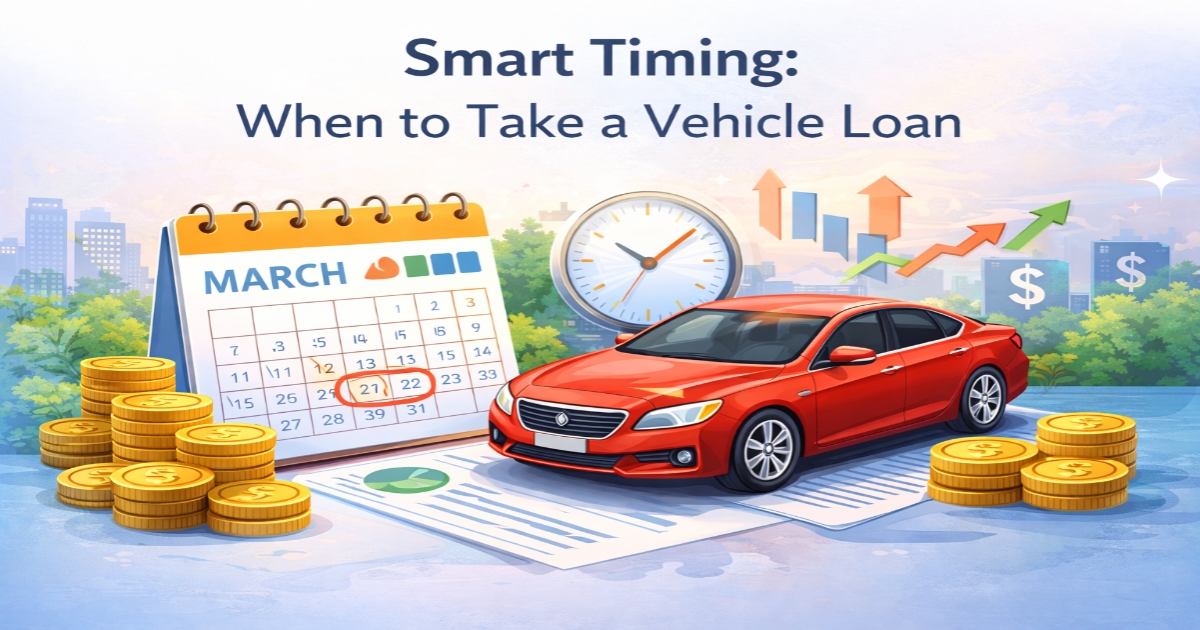
Timing can influence both loan availability and borrowing conditions. While vehicle loans are available throughout the year, interest rates and lender policies may vary depending on economic trends, institutional targets, and market conditions. Borrowers who are aware of these patterns may find opportunities for more favorable terms.
Financial institutions often revise interest rates based on central bank policies and broader economic indicators. Periods of stable or declining interest rates may result in comparatively lower borrowing costs.
Additionally, lenders and dealerships may offer incentives during specific periods, such as the end of financial quarters or fiscal years, to meet internal targets.
Timing considerations include:
- Monitoring interest rate trends
- Applying during periods of financial stability
- Avoiding loans during uncertain income phases
- Allowing time to improve credit scores
- Comparing offers across multiple lenders
Personal financial readiness is equally important. Borrowers should assess savings, emergency funds, and ongoing obligations before committing to a loan. Smart timing involves aligning market conditions with personal financial preparedness to support sustainable borrowing.
Selecting Loan Tenure and Repayment Structure
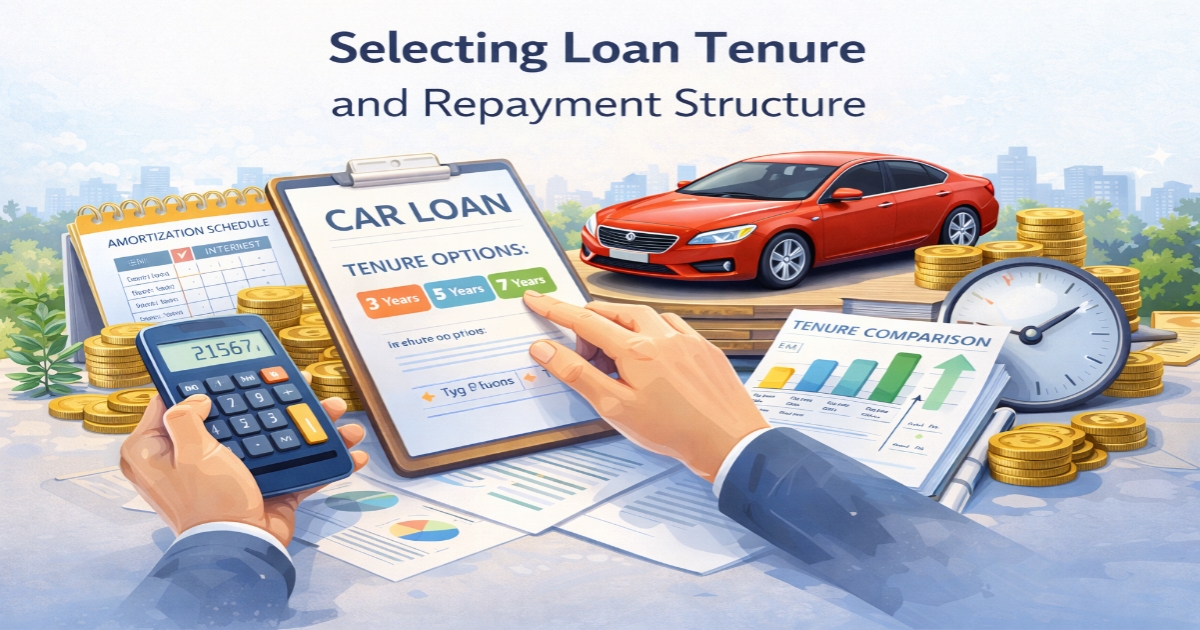
Loan tenure and repayment structure directly affect both monthly obligations and long-term costs. Shorter tenures typically result in higher EMIs but lower total interest, while longer tenures reduce monthly payments but increase overall repayment amounts. Selecting the appropriate tenure requires balancing cash flow comfort with total financial efficiency.
Repayment flexibility is another important consideration. Some loans allow partial prepayments or early closure with minimal charges, while others impose penalties. Understanding these conditions can provide flexibility if financial circumstances change during the loan period.
Key factors to evaluate include:
- Monthly income stability
- Existing financial commitments
- Emergency savings availability
- Prepayment and foreclosure terms
- Long-term financial goals
A suitable loan structure supports consistent repayment without compromising essential expenses or savings. Borrowers should select terms that align with realistic income expectations rather than maximum eligibility limits.
Making Informed and Responsible Vehicle Loan Choices
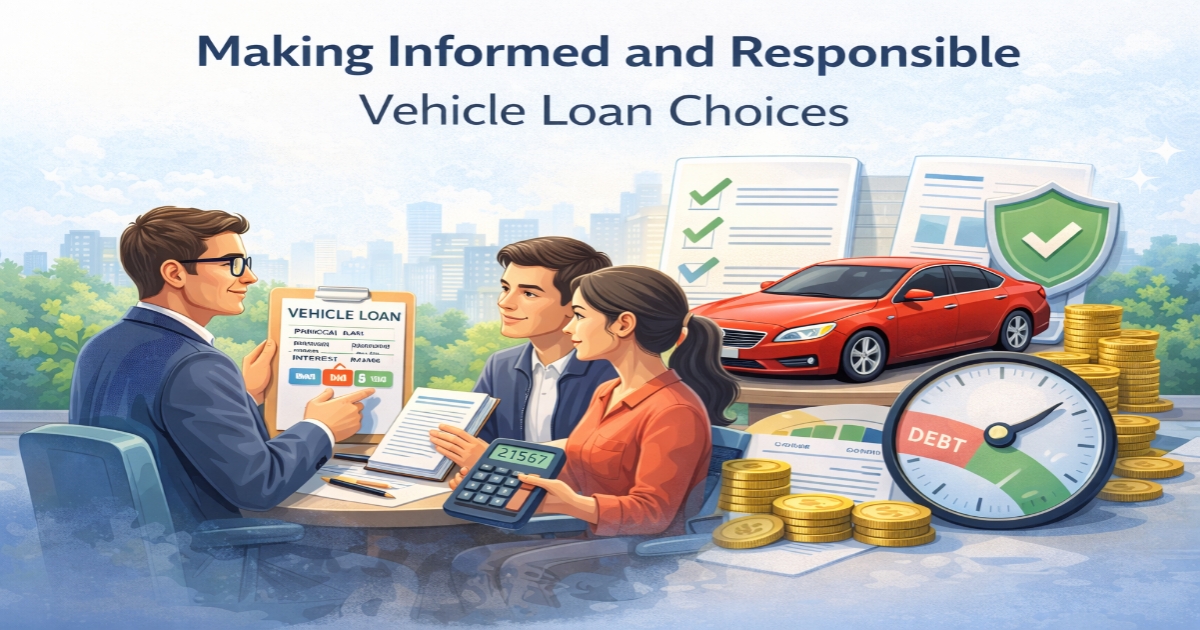
Informed decision-making is central to managing vehicle loans effectively. Borrowers benefit from researching loan options, understanding financial terminology, and comparing offers from multiple lenders. A vehicle loan should fit within a broader financial plan rather than being treated as an isolated purchase decision.
Responsible borrowing involves assessing affordability beyond approval eligibility. Lenders may approve higher amounts based on income, but borrowers should consider future expenses, financial goals, and potential income fluctuations. Reviewing loan agreements carefully and asking clarifying questions can prevent misunderstandings later.
Best practices for responsible vehicle loan decisions include:
- Comparing interest rates and loan structures
- Reading all terms and conditions thoroughly
- Avoiding unnecessary add-ons
- Maintaining repayment discipline
- Prioritizing long-term financial stability
When approached with knowledge and planning, vehicle loans can serve as practical financial tools. Understanding interest rates, recognizing psychological influences, and choosing appropriate timing and structure help borrowers manage obligations effectively while maintaining financial balance.
Final Verdict
Vehicle loans are an important financial tool that can make vehicle ownership more accessible, but their long-term impact depends largely on how well they are understood and managed.
A clear understanding of interest rates, loan structures, repayment methods, and timing allows borrowers to make decisions that are practical and sustainable rather than reactive.
When individuals look beyond monthly installments and examine the total cost of borrowing, they gain a more accurate picture of their financial commitment and can plan accordingly.
Equally important is recognizing the psychological factors that influence vehicle loan decisions. Emotional appeal, convenience, and perceived affordability often shape choices more than objective analysis.
By slowing down the decision-making process, comparing multiple options, and reviewing loan terms carefully, borrowers can reduce the risk of taking on unnecessary financial pressure. Awareness helps transform vehicle financing from an emotional decision into a structured financial agreement.
Smart timing and thoughtful loan selection further contribute to responsible borrowing. Aligning personal financial readiness with favorable market conditions, selecting an appropriate loan tenure, and ensuring repayment flexibility can support long-term financial stability.
Ultimately, informed and well-planned vehicle loan decisions help individuals maintain control over their finances while meeting their transportation needs in a balanced and sustainable way.
Frequently Asked Questions (FAQ)
Q.1: What is a vehicle loan and how does it work?
A vehicle loan is a financial arrangement in which a lender provides funds to purchase a new or used vehicle, and the borrower agrees to repay the amount over a fixed period through regular installments. These installments typically include both the principal amount and interest. The loan tenure, interest rate, and repayment structure are defined at the time of approval. While the vehicle serves as collateral for the loan, ownership rights may remain partially with the lender until the loan is fully repaid. Understanding how repayments are structured and how interest is calculated helps borrowers manage their obligations more effectively.
Q.2: How is interest calculated on vehicle loans?
Interest on vehicle loans is usually calculated using either a reducing balance method or a flat rate method. Under the reducing balance method, interest is charged only on the outstanding principal, which decreases as repayments are made. In contrast, flat rate interest is calculated on the original loan amount for the entire tenure, resulting in a higher effective cost. Borrowers should review the interest calculation method stated in the loan agreement to accurately assess the total repayment amount.
Q.3: What factors affect vehicle loan interest rates?
Several factors influence the interest rate offered on a vehicle loan. These include the borrower’s credit score, income stability, loan tenure, type of vehicle, and overall economic conditions. New vehicles generally attract lower interest rates compared to used vehicles due to lower risk for lenders. Market interest rates and internal lending policies of financial institutions also play a role in determining final loan terms.
Q.4: Is it better to choose a longer or shorter loan tenure?
Choosing the right loan tenure depends on individual financial circumstances. Shorter tenures usually result in higher monthly payments but lower total interest costs. Longer tenures reduce monthly installments but increase the overall repayment amount. Borrowers should select a tenure that balances affordability with long-term financial efficiency, ensuring that monthly payments do not strain essential expenses or savings.
Q.5: Can a vehicle loan be repaid early?
Many lenders allow partial prepayment or full foreclosure of vehicle loans, but the terms vary. Some loans include prepayment or foreclosure charges, especially during the initial years of the loan. Borrowers should review these conditions before signing the agreement, as early repayment can reduce interest costs if penalties are minimal or absent.
Q.6: How important is credit score when applying for a vehicle loan?
Credit score is an important factor in determining loan eligibility and interest rates. A higher credit score generally indicates lower risk for lenders and may result in more favorable loan terms. Maintaining a good credit history through timely repayments and responsible credit usage can improve approval chances and reduce borrowing costs.
Q.7: Are there additional costs associated with vehicle loans?
Yes, vehicle loans may include costs beyond interest payments. These can include processing fees, documentation charges, insurance premiums, and registration-related expenses. Some loans may also bundle optional add-ons. Borrowers should account for these costs when calculating the total expense of vehicle ownership.
Q.8: How can borrowers make vehicle loan decisions more responsibly?
Responsible vehicle loan decisions involve researching multiple lenders, comparing interest rates and loan structures, understanding all terms and conditions, and assessing personal financial readiness. Borrowers should avoid focusing solely on monthly payments and instead consider the total cost of the loan and its impact on long-term financial goals.