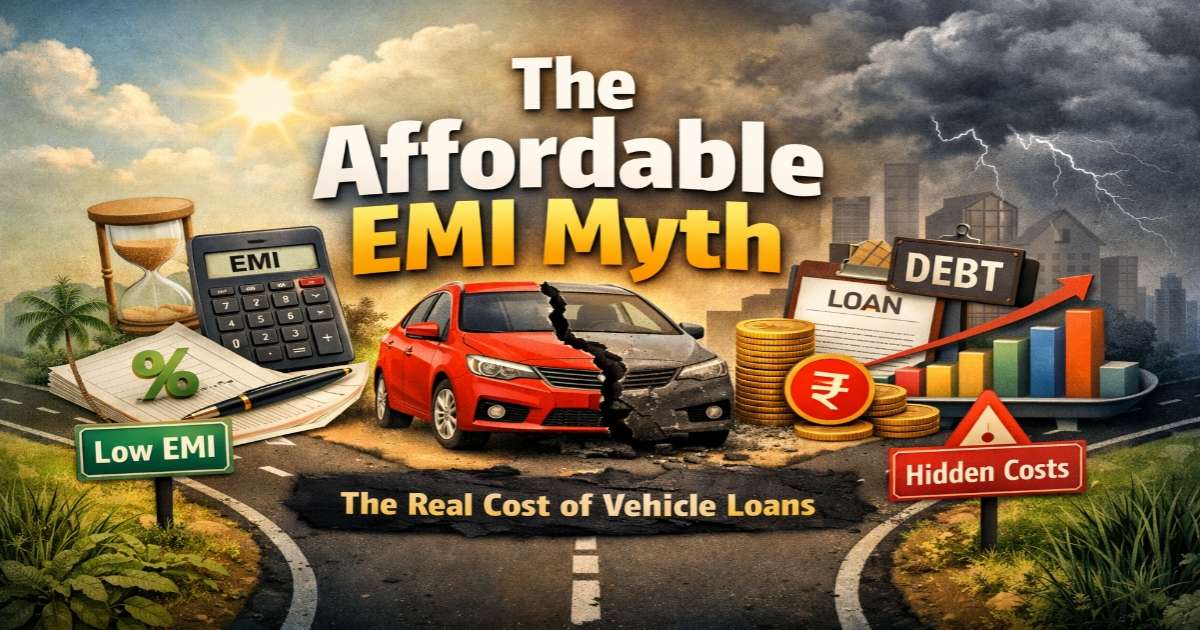

Why “Low EMI” Sounds Too Good to Be True
The phrase “easy monthly installments” has become one of the most powerful hooks in vehicle advertising, shaping how buyers perceive affordability.Many consumers focus almost entirely on the EMI amount while ignoring the deeper financial mechanics behind it.
This narrow focus creates the illusion that a vehicle is well within budget, even when the total cost far exceeds expectations.
Table of Contents
Affordable EMIs often rely on extended loan tenures, bundled charges, and clever psychological framing that reduces financial resistance at the point of purchase.Understanding this myth is essential for anyone trying to make a financially sound vehicle decision rather than an emotionally driven one.
- EMIs emphasize monthly comfort instead of long-term cost
- Marketing highlights affordability rather than total repayment
- Longer tenures reduce EMIs but increase interest paid
- Buyers often skip full loan math before committing
Understanding What an EMI Actually Represents
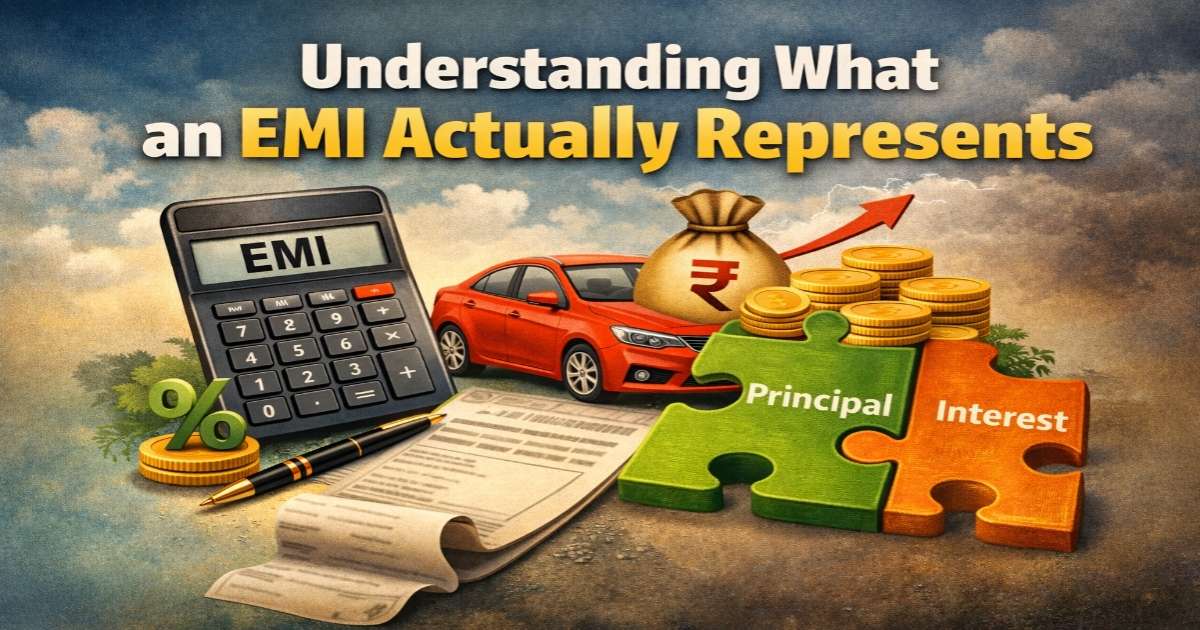
An EMI is not a discount, a benefit, or a saving; it is simply the total loan repayment divided across time with interest applied. The number feels manageable because it spreads financial responsibility thinly over many years. However, this mathematical convenience hides the true price of borrowing.
When buyers see a small EMI, they subconsciously assume the vehicle itself is affordable, even though the EMI reflects a financing structure rather than the vehicle’s intrinsic value. Without understanding this distinction, borrowers mistake monthly feasibility for overall affordability.
- EMI includes principal and interest, not just vehicle cost
- Smaller EMIs often mean longer repayment periods
- Interest compounds over time, increasing total outflow
- EMI comfort does not equal financial efficiency
The Psychological Power of Monthly Numbers
Human brains process smaller, recurring numbers more comfortably than large lump-sum figures. This cognitive bias is heavily leveraged in vehicle financing promotions. A vehicle priced at a large amount feels expensive, but when broken into a monthly EMI, it appears approachable and even harmless. This mental reframing reduces hesitation and speeds up purchase decisions. Unfortunately, this same bias also reduces critical thinking, making buyers less likely to calculate the long-term consequences of borrowing.
- Monthly figures feel safer than total prices
- Smaller numbers reduce purchase anxiety
- Buyers underestimate cumulative payments
- Psychological comfort overrides financial logic
How Loan Tenure Creates the Illusion of Affordability
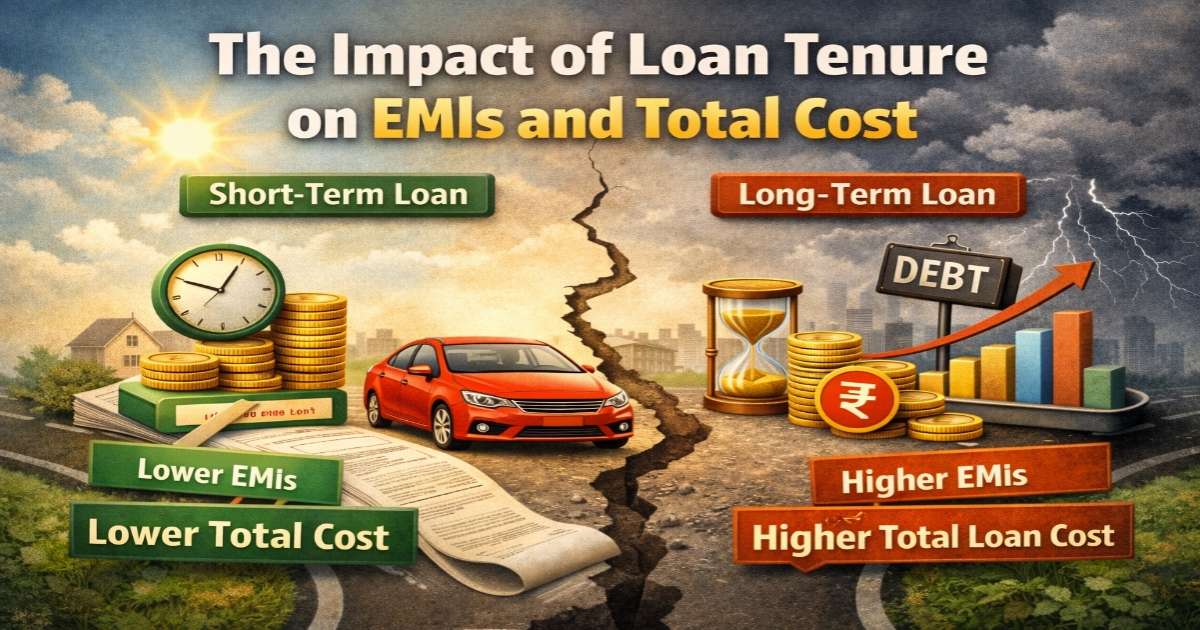
One of the most common ways lenders lower EMIs is by extending the loan tenure. While this reduces the monthly burden, it significantly increases the total interest paid over time. A longer tenure means the borrower remains in debt for years, often paying interest long after the vehicle has depreciated substantially. What appears to be affordability is often just delayed financial pressure, spread thinly across a longer horizon.
- Longer tenure equals lower monthly EMI
- Total interest rises with extended repayment
- Vehicle value drops faster than loan balance
- Borrowers stay financially tied for years
Interest Rates: The Silent Multiplier
Interest rates play a critical role in determining the real cost of a vehicle loan, yet they receive far less attention than EMIs. Even a small difference in interest rate can translate into a substantial increase in total repayment.
Many borrowers accept advertised EMI figures without fully understanding how interest is calculated, how compounding works, or how rate variations affect long-term cost. This lack of clarity benefits lenders but disadvantages consumers.
- Interest rate impacts total repayment significantly
- Small rate changes cause large cost differences
- Compounding increases long-term interest burden
- EMI ads rarely highlight interest impact clearly
Down Payments and Their Hidden Importance
Down payments are often minimized in marketing discussions because higher down payments reduce loan size but increase upfront resistance. However, a larger down payment reduces interest exposure, shortens loan tenure, and improves overall financial health.
Buyers who prioritize low EMIs often opt for minimal down payments, unknowingly increasing their total borrowing cost. This trade-off is rarely emphasized but is crucial for understanding true affordability.
- Higher down payments reduce loan principal
- Lower principal means less interest paid
- Minimal down payment increases long-term cost
- EMI focus discourages healthy upfront payments
Processing Fees and Ancillary Charges
Vehicle loans often include processing fees, documentation charges, insurance add-ons, and service packages. These costs are frequently rolled into the loan amount, raising the EMI slightly but significantly increasing total repayment.
Because these charges are small relative to the vehicle price, buyers tend to overlook them. Over time, however, interest applies to these add-ons as well, turning minor fees into major expenses.
- Processing fees add to loan principal
- Add-ons increase EMI subtly but persistently
- Interest applies to bundled charges
- Small extras inflate long-term cost
The Depreciation vs Loan Balance Problem
Vehicles depreciate rapidly, especially in the early years. Many borrowers find themselves owing more on their loan than the vehicle’s market value, particularly with long-tenure, low-EMI loans.
This negative equity situation limits flexibility and increases financial risk. If the vehicle needs to be sold or replaced early, the outstanding loan can become a serious burden.
- Vehicles lose value quickly
- Loan balance may exceed resale value
- Long tenures worsen negative equity
- Early exits become financially painful
How EMI-Focused Advertising Shapes Buyer Behavior
Marketing campaigns emphasize ease, comfort, and lifestyle rather than financial realism. By centering ads around EMI affordability, advertisers shift attention away from ownership cost and long-term implications.
This strategy works because it aligns with consumer psychology and short-term thinking. The result is a market where buyers feel financially confident at purchase but strained later.
- Ads highlight monthly ease, not total cost
- Emotional appeal outweighs financial clarity
- Short-term comfort is prioritised
- Long-term burden is downplayed
Budgeting Beyond the EMI
True affordability extends beyond the loan installment. Fuel, maintenance, insurance, registration, and repairs all add to the cost of ownership.
When buyers allocate their entire budget to EMI comfort, they leave little room for these recurring expenses. This creates monthly stress despite an initially “affordable” loan structure.
- EMI is only one ownership cost
- Operating expenses add up monthly
- Tight budgets increase financial stress
- Holistic planning is often ignored
Why Lower EMI Does Not Mean Better Deal
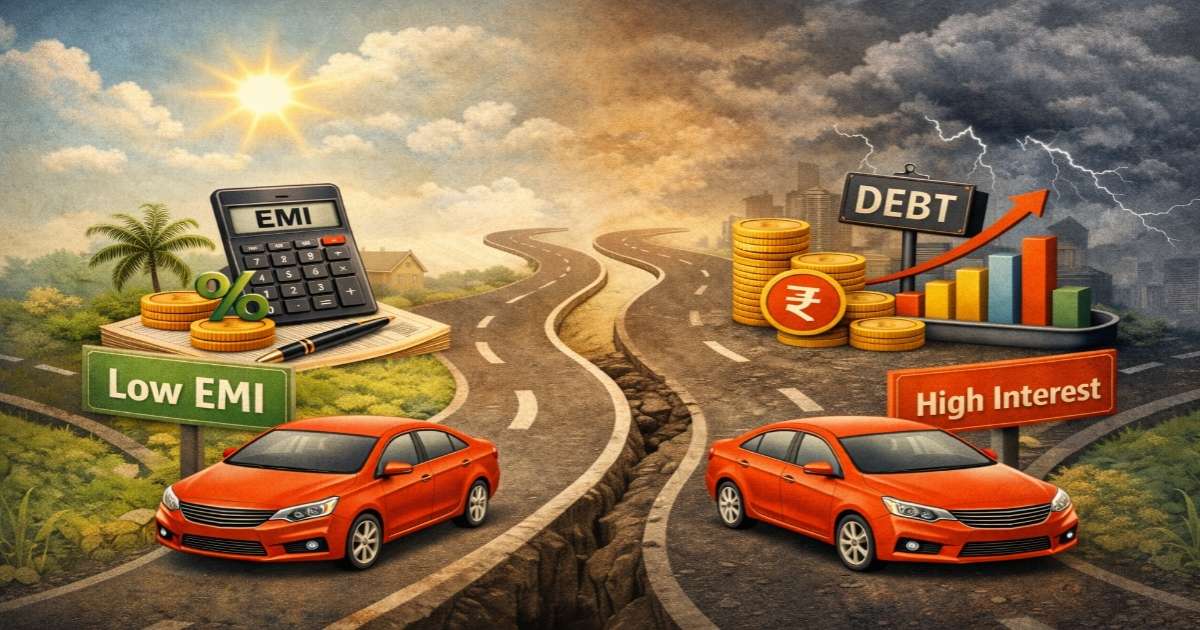
A lower EMI can sometimes indicate a worse deal if it is achieved through higher interest rates, longer tenure, or hidden charges. Comparing loans purely on EMI leads to poor financial decisions. The better metric is total repayment and cost-to-value ratio over time, which reveals the true economic impact.
- Low EMI may hide higher interest
- Longer loans increase total repayment
- Total cost matters more than monthly cost
- EMI comparison alone is misleading
How Consumers Can Read Loan Math More Critically

Understanding loan math does not require advanced financial knowledge; it requires asking the right questions.
Buyers who review total payable amounts, interest breakdowns, and tenure implications gain clarity. This shift from EMI-centric thinking to cost-centric analysis leads to better decisions and reduced financial regret.
- Review total repayment amount
- Compare interest outflow, not just EMI
- Question tenure and add-ons
- Focus on long-term affordability
The Long-Term Impact on Financial Freedom
Vehicle loans affect cash flow for years, limiting saving, investing, and lifestyle flexibility. What begins as a manageable EMI can become a recurring constraint that slows wealth building.
Recognizing this impact helps buyers align vehicle choices with broader financial goals rather than short-term convenience.
- EMIs reduce long-term cash flexibility
- Debt delays savings and investments
- Financial freedom requires lower obligations
- Vehicle choice impacts future options
Rethinking the Definition of “Affordable”
Affordability should mean sustainability, not just monthly comfort. A truly affordable vehicle loan supports stable finances, low stress, and long-term security.
When buyers redefine affordability beyond EMI size, they make choices that align better with income stability and future goals.
- Affordability means sustainable ownership
- Monthly ease is not the only metric
- Long-term stability matters most
- Smarter definitions lead to better outcomes
Conclusion: Moving Beyond the EMI Illusion
The myth of affordable EMIs persists because it simplifies complex financial decisions into a single comforting number. While EMIs serve a practical purpose, they are not a complete measure of affordability.
A deeper understanding of vehicle loan math empowers consumers to look beyond marketing narratives and make informed, balanced choices. When buyers evaluate total cost, tenure impact, and long-term financial health, they move from illusion to clarity—and from impulsive decisions to confident ownership.
- EMI is a tool, not a truth
- Loan math reveals real affordability
- Informed buyers avoid long-term strain
- Financial clarity leads to better ownership
Frequently Asked Questions ( FAQS )
Q.1: What is the affordable EMI myth?
The affordable EMI myth refers to the common belief that a vehicle is affordable simply because the monthly EMI is low. In reality, low EMIs are often achieved by extending the loan tenure or increasing interest costs. This makes the monthly payment look comfortable while significantly increasing the total amount paid over time. The myth exists because buyers focus on short-term affordability instead of long-term financial impact, including interest, fees, and depreciation.
Q.2: Why do low EMIs often lead to higher total loan costs?
Low EMIs usually mean longer repayment periods. While this reduces monthly pressure, it increases the total interest paid across the loan duration. The longer the tenure, the more interest accumulates, even if the EMI feels manageable. This is why the affordable EMI myth can be misleading—borrowers may end up paying much more than the vehicle’s actual value.
Q.3: How does loan tenure affect the affordable EMI myth?
Loan tenure plays a major role in shaping EMIs. Extending the tenure lowers the EMI but increases overall repayment. Many buyers unknowingly accept longer tenures to match their budget without realizing the financial trade-off. This reinforces the affordable EMI myth by prioritizing monthly comfort over total cost efficiency and long-term financial health.
Q.4: Are interest rates more important than EMI amounts?
Yes, interest rates are often more important than the EMI itself. A slightly higher interest rate can significantly increase the total loan cost, even if the EMI difference seems small. Focusing only on EMI hides how interest compounds over time. Understanding interest rates helps break the affordable EMI myth and allows borrowers to compare loans more accurately.
Q.5: Do hidden charges contribute to the affordable EMI myth?
Hidden or bundled charges such as processing fees, insurance add-ons, and service packages often increase the loan amount. These costs are usually added to the principal, meaning borrowers also pay interest on them. Since they barely affect the EMI, buyers overlook them, further strengthening the illusion created by the affordable EMI myth.
Q.6: Is a low EMI always a bad financial choice?
Not always. A low EMI can be suitable if it aligns with stable income, low interest rates, and a reasonable loan tenure. The problem arises when buyers choose low EMIs without understanding total repayment and long-term impact. Breaking the affordable EMI myth means evaluating affordability based on overall cost, not just monthly convenience.
Q.7: How can buyers avoid falling into the affordable EMI myth?
Buyers can avoid the affordable EMI myth by focusing on total loan cost, comparing interest rates, choosing shorter tenures when possible, and making higher down payments. Reviewing loan statements carefully and budgeting beyond EMI—including fuel, maintenance, and insurance—helps ensure genuine affordability rather than perceived comfort.
Q.8: Why is understanding the affordable EMI myth important before buying a vehicle?
Understanding the affordable EMI myth helps buyers make informed decisions and avoid long-term financial stress. Vehicles depreciate quickly, but loan obligations remain fixed. Recognizing how EMIs work protects buyers from overborrowing and supports healthier financial planning, ensuring that vehicle ownership remains sustainable rather than burdensome.